solo queue
Solo queuing vs Duo Queueing vs Team Queuing - which matchmaking is best for you?
· 3 min read
Explore the differences between Solo Queue, Duo Queue, and Team Queue. Learn which matchmaking style suits your competitive gaming goals with insights from Reddit players and stats from community discussions.
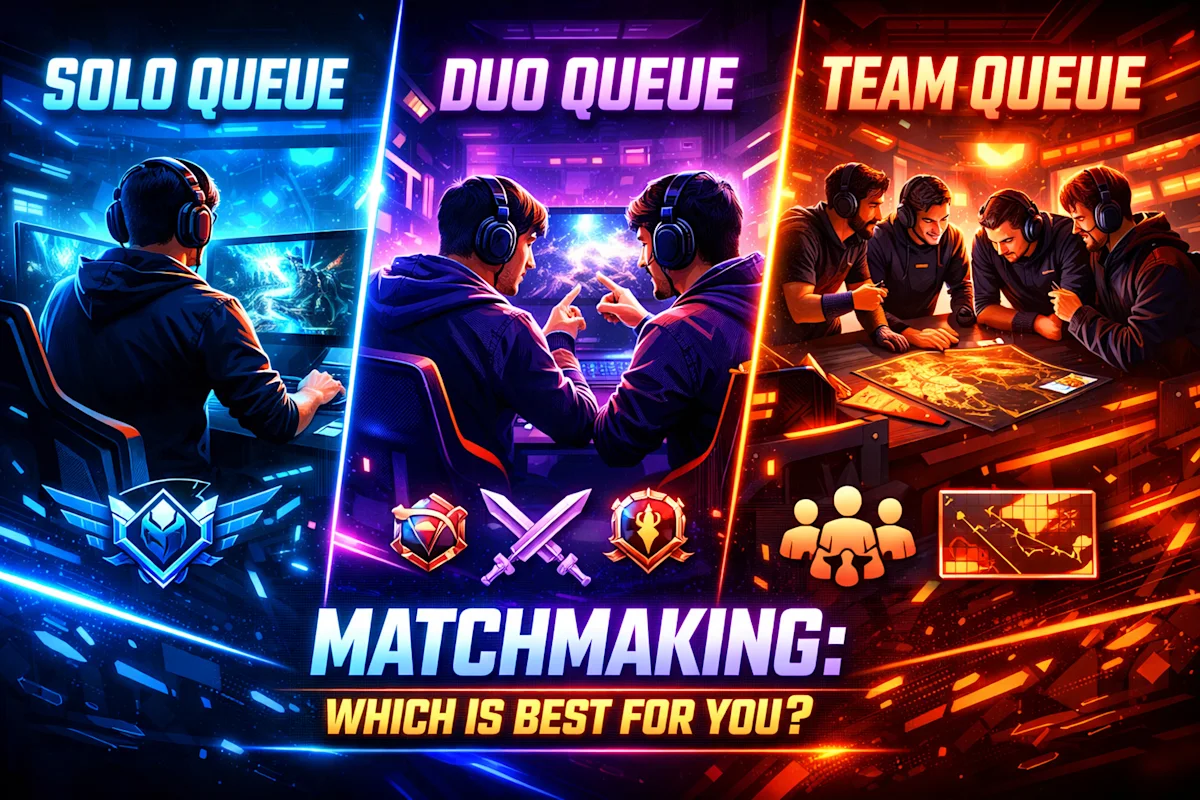
Matchmaking systems are at the heart of competitive multiplayer games — whether it’s League of Legends, Apex Legends, Valorant, or other titles. Gamers around Reddit frequently debate which queue type is best for skill improvement, win rate, and overall enjoyment.
Let’s break down the advantages, drawbacks, and community stats around Solo Queue, Duo Queue, and Team Queue matchmaking modes — and help you decide which fits your playstyle.
🧠 What These Match Types Mean
Solo Queuing — You enter alone and are paired with random teammates. Your success depends heavily on individual performance.
Duo Queuing — You queue with one more trusted partner. You share coordination and often synergize better than a random pair.
Team Queuing — Full premade teams (usually 3–5 players depending on game). Communication and strategy are far more structured.
📊 Reddit & Community Insights
Here’s what players across gaming communities are saying:
🔹 Solo Queue
Most Redditors find solo queue the true test of skill. Without partners you communicate with regularly, you rely entirely on individual game sense.
Some players report frustration due to inconsistent teammate quality (“like a casino”, random tilts and trolls) and believe solo queue can feel unfair.
Solo queue removes the randomness of buddies but also elevates the risk of bad teammates impacting your rank.
Pros: ✔ Great for learning fundamentals ✔ Reflects true personal skill ✔ No dependency on others
Cons: ✘ Poor team coordination ✘ Higher tilt rate due to randomness
🔹 Duo Queue
Reddit threads on r/summonerschool emphasize that duo queue allows players to coordinate better and climb faster due to synergy with a friend or partner.
However, according to some Redditors, duo partners don’t necessarily increase your overall win rate statistically — opponents usually also include a duo.
Many players mention duo can feel easier at lower ranks, especially with roles like Mid/Jungle working together. But it might also mask weaknesses, making improvement harder.
Others share it can be mentally harder — communication pressure, blame, or disagreements can hurt performance.
Pros: ✔ Better coordination than solo queue ✔ Shared responsibility and morale ✔ Potentially faster climb if synergized
Cons: ✘ Opposing teams usually also include duos ✘ Can reduce focus on personal improvement
🔹 Team Queue
Rare in many games outside private matches, but where available (like Flex Queue or organized Team Ranked), premade teams allow full communication, roles, and strategy execution.
Professional and semi-competitive players often prefer team queuing because strategy execution and coordination matter above raw aim or mechanical skill.
However, this mode is usually harder to access solo players unless you find a full premade group.
Pros: ✔ Best coordinated play ✔ Ideal for serious competition ✔ Strategy > Randomness
Cons: ✘ Harder access for solo players ✘ Can feel rigid for casual play
🏆 Which Matchmaking Style Fits You?
Goal | Best Option |
Learn fundamentals | Solo Queue |
Climb quickly | Duo Queue |
Competitive team play | Team Queue |
Fun with friends | Team or Duo Queue |
No commitment | Solo Queue |
Solo Queue is often the purest form of skill assessment — if you want to get better as a player and learn to adapt to chaos, go for solo. Duo Queue is for social players who want better coordination without committing to a full team. Team Queue shines if you’re playing with a consistent group and want structured competition.